
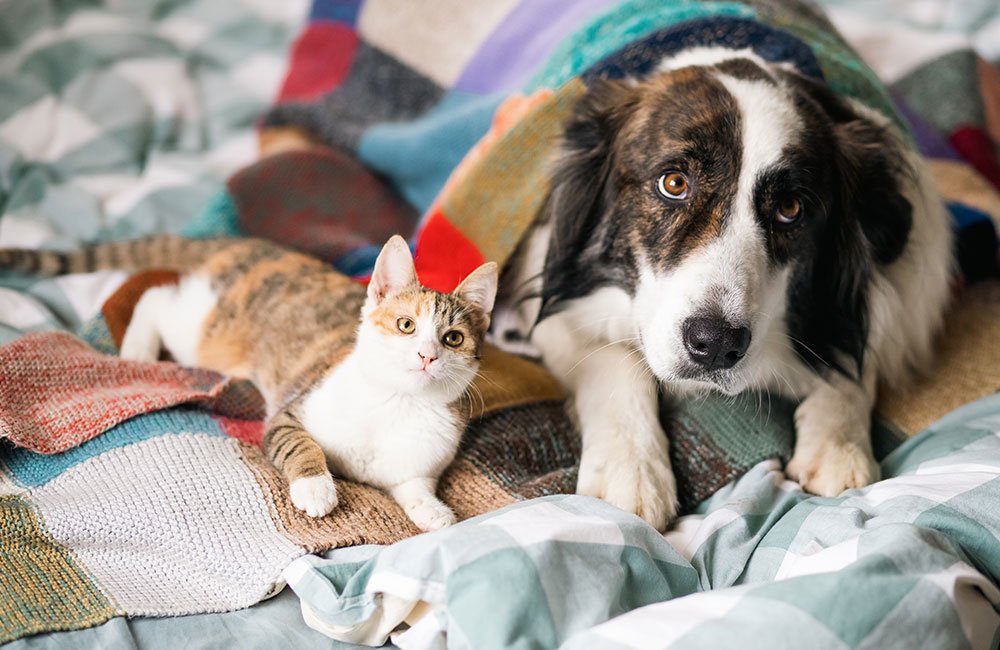
When people talk about pets, cats and dogs are often set up as opposites. Cats are quiet, independent, and sometimes distant. Dogs are energetic, loyal, and always eager to please. But if you’ve lived with both, you already know they’re not as different as they seem. Look closely and you’ll notice their lives overlap in surprising ways.
Companionship Is a Shared Need
Despite their reputations, both cats and dogs look for company. A dog may greet you at the door with excitement, while a cat might curl up silently beside you on the couch. The behavior may differ, but the message is the same: they don’t want to be alone.
Veterinarians agree that social interaction is vital for pets of all kinds. The American Veterinary Medical Association highlights how regular human contact supports both mental and physical health (AVMA).
Reading Their Silent Language
If you’ve ever wondered what your pet is thinking, their body language offers the best clues. Cats and dogs use their tails, eyes, and posture as signals. A stiff body means stress. Relaxed muscles show comfort. Even ear position says a lot about mood.
The key difference is interpretation. A dog wagging its tail usually signals happiness. A cat swishing its tail side to side often means irritation. Different meanings, but the same principle: both rely on silent signals to communicate.
Wild Roots Still Show
Cats and dogs may nap on our sofas, but they haven’t forgotten where they came from. Watch a cat crouch and pounce on a toy, and you’re seeing echoes of a hunter. Throw a ball for a dog, and their instinct to chase kicks in instantly.
They’re also territorial by nature. Dogs often mark spots outdoors, while cats rub their scent onto people and objects. Both behaviors create a sense of ownership and comfort in their environment.

Food and Grooming Habits
Diet brings another point of connection. Both species need protein to thrive, a reminder of their carnivorous roots. While dogs are more flexible eaters, neither does well without balanced nutrition. That’s why veterinarians recommend quality diets designed for their species.
Grooming also plays a role in their daily lives. Cats are meticulous cleaners, but dogs lick and fuss over themselves, too. Still, neither can manage without a little help. Brushing, nail trimming, and checkups are responsibilities owners can’t ignore.
Emotional Bonds Run Deep
Ask any pet owner, and they’ll tell you — the emotional bond is real. Dogs are known for loyalty, but cats aren’t the detached creatures they’re sometimes portrayed to be. Studies have shown cats form strong attachments to humans, much like dogs do.
Both respond to our moods, stay close when we’re stressed, and celebrate our presence in their own way. For people, these bonds bring comfort, reduce stress, and add meaning to everyday life.
Conclusion
Cats and dogs might differ in personality, but at heart, they share more than people realize. They want companionship, they use silent signals to talk, they carry instincts from their ancestors, and above all, they give us loyalty and affection. It’s these shared qualities that explain why cats and dogs remain the most cherished pets across the world.
FAQs
Yes, cats can love their owners as deeply as dogs. Research shows cats form secure attachments to humans, much like dogs do.
Absolutely. With proper introductions, many cats and dogs not only coexist but also form close friendships.
Cats purr and dogs wag tails as ways to communicate. Both signals often mean contentment, but context is important.
Yes, both species can sense human moods. They often comfort owners by staying close during times of stress or sadness.
Intelligence is expressed differently. Dogs excel in social learning, while cats show independence and problem-solving skills.