
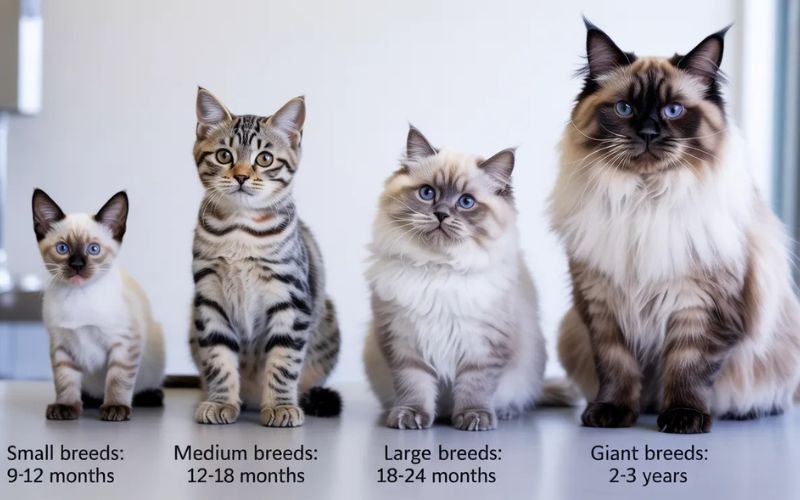
When do cats stop growing in different breeds? It depends on the type of cat you have. While most cats reach their full size around one year old, some breeds continue growing well into their second or even third year.
Growth is not only about weight. It includes bone development, muscle mass, and overall body shape. Smaller breeds mature faster, while large and giant breeds take more time. Understanding this timeline helps you plan feeding, vet visits, and overall care.
Let’s look at how growth varies by breed and what you can expect.
How Cat Growth Works?
Kittens grow rapidly in their first six months. During this time, they gain weight quickly and develop coordination and strength.
Most cats reach near adult height by 9 to 12 months. However, they may continue filling out and gaining muscle after that. Growth plates in the bones usually close between 12 and 18 months in average-sized breeds.
Several factors affect growth:
- Breed size and genetics
- Gender
- Nutrition quality
- Spay or neuter timing
- Overall health
Larger breeds simply need more time for their bones and joints to fully mature.
When Do Cats Stop Growing in Different Breeds?
Here is a general guide to growth timelines by breed size:
| Breed Type | Examples | Full Growth Age |
| Small to medium breeds | Siamese, Russian Blue | 9 to 12 months |
| Average domestic cats | Domestic Shorthair | 12 to 18 months |
| Large breeds | British Shorthair, Ragdoll | 18 to 24 months |
| Giant breeds | Maine Coon, Norwegian Forest Cat | 2 to 3 years |
These ranges are typical but not exact. Individual cats may mature slightly earlier or later.
Small and Medium Breeds
Breeds like Siamese, Abyssinian, and Burmese grow quickly. Most reach adult size by their first birthday.
Even though height growth slows at 9 to 10 months, muscle tone may continue improving for a few more months. Their slimmer body type often makes changes less obvious.
Domestic Mixed Breed Cats
Most house cats fall into this category. They usually stop growing between 12 and 18 months.
You may notice they reach their full height first, then slowly gain muscle and body mass. Weight gain after 18 months is often related to diet rather than natural growth.
Large Breeds
Ragdolls and British Shorthairs mature more slowly. These cats may look like adults at one year but are still developing.
Bone density and chest width continue increasing into the second year. Owners sometimes mistake this normal development for weight gain.
Giant Breeds
Maine Coons are the best example of slow maturity. They can continue growing until they are 2 to 3 years old.
This extended growth period is normal. According to the Cat Fanciers’ Association, Maine Coons are known for delayed physical maturity compared to other breeds. You can read more about breed standards at the Cat Fanciers’ Association.
Because their joints develop longer, proper nutrition during kittenhood is especially important.
Signs Your Cat Has Stopped Growing
It can be hard to tell exactly when growth ends, but there are common signs:
- Weight stabilizes for several months
- Paws no longer look oversized compared to the body
- Energy levels become more steady
- Body proportions appear balanced
A veterinarian can confirm maturity by checking bone development during routine exams.The American Veterinary Medical Association explains how growth and development stages affect overall health.
Regular checkups help ensure your cat is developing properly.
Does Gender Affect Growth?
Yes, gender plays a small role.
Male cats often grow slightly larger than females of the same breed. They may also take a bit longer to reach full muscle development.
Spaying or neutering can influence metabolism. After surgery, calorie needs may decrease. This change does not stop growth early, but it can affect weight if feeding is not adjusted.
Nutrition and Growth
Proper nutrition is one of the biggest factors in healthy development.
Kittens need food formulated for growth. These diets contain higher protein and balanced minerals to support bones and muscles.
Feeding adult food too early can limit optimal development. Most veterinarians recommend switching to adult food at:
- 12 months for average breeds
- 15 to 18 months for large breeds
- Up to 24 months for giant breeds
Always consult your vet before changing food types, especially for slow-maturing breeds.
Indoor vs Outdoor Cats
Indoor cats often appear to grow more steadily because their diet is controlled. Outdoor cats may burn more calories, which can affect muscle mass and weight gain.
However, breed genetics remain the strongest factor in determining when growth stops.
Final Thoughts
When do cats stop growing in different breeds? Most cats finish growing between 12 and 18 months, but large and giant breeds can take up to three years to fully mature.
Breed size is the main factor, followed by nutrition and overall health. Monitoring your cat’s development and working closely with your veterinarian ensures healthy growth at every stage.
Understanding your cat’s growth timeline helps you make better decisions about food, care, and expectations. Each cat develops at its own pace, but knowing what is typical for the breed gives you a clear guide.
Common Growth Questions
Do cats grow after one year?
Many do, especially large breeds. While height growth slows after one year, muscle and body mass may continue developing.
Can you predict adult size from kitten paws?
Large paws can suggest a larger adult size, but this is not reliable. Breed background gives a better estimate.
When should I worry about slow growth?
If your kitten is not gaining weight steadily during the first year, or seems smaller than littermates, consult a veterinarian. Underlying health or nutritional issues may need attention.