
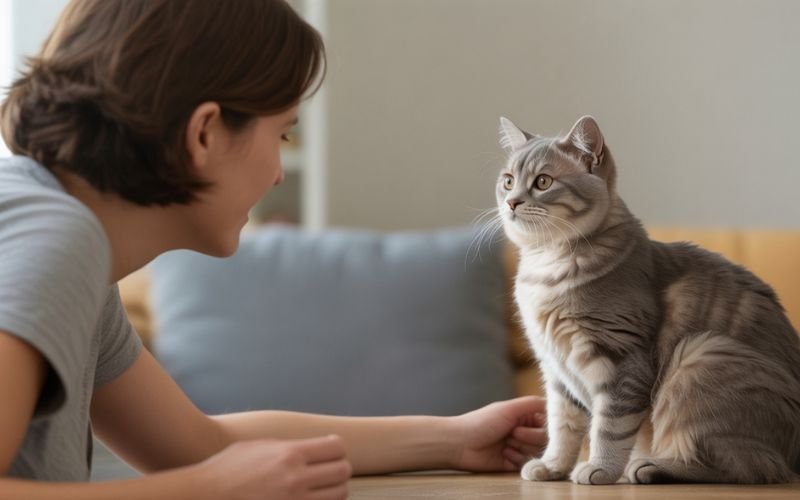
Many cat owners notice their cat staring at them for long periods.
This behavior can feel confusing at first.
In most cases, staring is normal.
Cats use eye contact as a form of communication.
Understanding the reason behind this behavior helps you respond correctly and avoid unnecessary concern.
Cats Use Eye Contact to Communicate
Cats rely heavily on body language.
Their eyes play an important role in how they express themselves.
Staring is one way cats gather information and send signals.
It does not always mean the same thing.
The meaning depends on the situation and the cat’s body posture.
Your Cat May Want Something
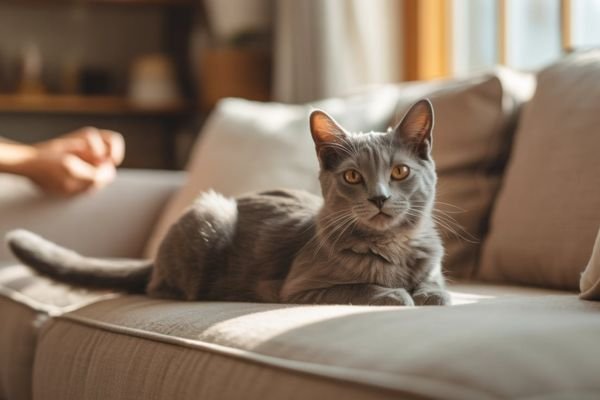
A common reason for staring is a simple request.
Your cat may want food, attention, or play.
Cats learn that staring often leads to a response.
This behavior is especially common around feeding times.
If your cat stares and then moves toward their bowl or toys, the reason is usually clear.
Your Cat Is Observing You
Cats are naturally observant animals.
They watch movement and changes in their environment.
If you are active, talking, or working, your cat may be watching quietly.
This type of staring is calm and focused.
It reflects curiosity rather than emotion.
Slow Blinking Shows Trust
Some cats stare and slowly blink their eyes.
This is a positive sign.
Slow blinking means your cat feels safe and relaxed.
It often occurs when a cat is resting nearby.
You can slowly blink back.
Many cats respond well to this interaction.
Staring Can Be a Sign of Comfort
Cats often watch people they trust.
This behavior shows comfort rather than need.
A relaxed cat may stare while lying down or sitting quietly.
Their body will appear loose and calm.
This behavior is common in cats that feel secure in their environment.
Seeking Reassurance From You
Cats sometimes stare during unfamiliar situations.
This may include loud noises, visitors, or changes in routine.
In these moments, your cat may be looking for reassurance.
They observe your reaction to decide how to respond.
A calm response from you helps your cat feel safe.
When Staring Indicates Stress
Not all staring is positive.
A fixed stare with tense posture may signal stress.
Signs to watch include wide pupils, flattened ears, or a stiff tail.
In these cases, give your cat space.
Avoid touching them until they relax.
Boredom Can Cause Staring
Cats need both mental and physical stimulation.
Without it, they may stare more often.
Boredom is common in indoor cats.
Short play sessions and interactive toys help reduce this behavior.
Regular engagement improves overall behavior and wellbeing.
Reading Body Language Alongside Staring
Eye contact alone does not give the full picture.
Always observe the entire body.
Relaxed cats appear loose and comfortable.
Stressed cats look tense and alert.
Tail movement and ear position provide helpful clues.
When to Be Concerned
Staring is usually harmless.
Sudden changes should be monitored.
If staring comes with confusion, hiding, or behavior changes, contact a veterinarian.
Older cats may stare more due to age related changes.
Early evaluation is recommended when behavior shifts quickly.
How You Should Respond
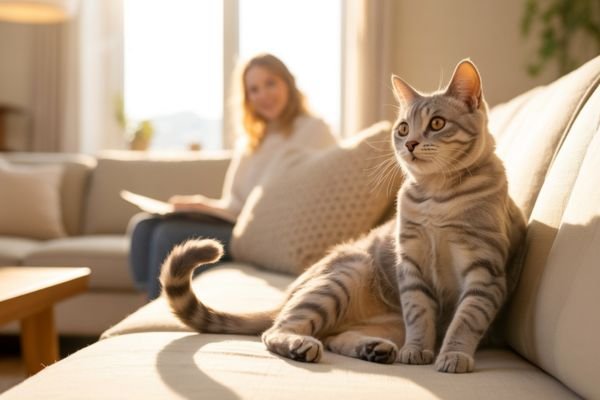
Respond based on your cat’s body language.
Offer attention if they seem calm and engaged.
Give space if your cat looks tense.
Never punish staring behavior.
It is a natural part of how cats communicate.
Final Thoughts
When your cat stares at you, it is usually normal behavior.
It reflects communication, curiosity, or comfort.Understanding the reason behind the stare helps strengthen your relationship.
Cats communicate quietly, but their signals are clear when you know how to read them.