

When most people think of sharks, they imagine solitary hunters roaming the deep blue ocean. However, sharks are not always loners. In fact, many species are social animals that form groups, each with its own unique name. So, what is a group of sharks called? The most commonly used term is a shiver, though school and frenzy are also used in certain situations.
In this article, we will dive into the fascinating world of shark groups, explain why they form them, and share some fun facts about these incredible predators.
Common Terms for a Group of Sharks
Sharks have captured human imagination for centuries, and over time, several terms have emerged to describe their groups.
1. Shiver
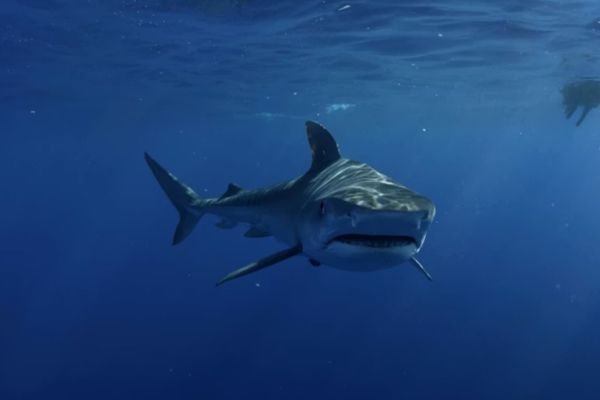
The most recognized term for a group of sharks is a shiver. This name evokes the image of sharks moving together in a coordinated, almost shivering motion through the water. A shiver can vary in size, sometimes just a few sharks, other times dozens, depending on the species and environmental conditions.
2. School

In some contexts, a group of sharks is called a school, similar to the term used for fish. Schools are usually smaller, organized groups that move together for protection, hunting efficiency, or navigation. Reef sharks, for instance, are often observed swimming in schools near coral formations.
3. Frenzy
A frenzy is less common but is used when sharks gather during feeding events, especially when prey is abundant. This term captures the chaotic, high-energy movements as multiple sharks compete for food. Witnessing a feeding frenzy can be dramatic, and it also highlights the opportunistic hunting nature of these predators.
Example: A group of hammerhead sharks circling a school of fish may form a shiver when calm, or a frenzy when feeding.
Why Sharks Form Groups?
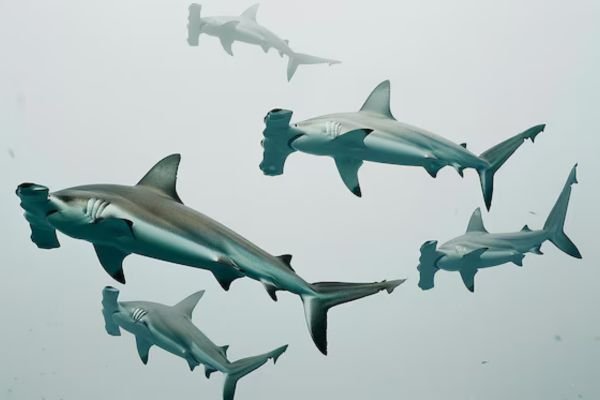
Despite their fearsome reputation, sharks benefit greatly from social interactions. Here are some reasons why they form groups:
1. Hunting Efficiency
Some species, like hammerheads or blacktip reef sharks, hunt in groups to increase their chances of capturing prey. Coordinated movements allow them to corner schools of fish or herd smaller sharks and rays for easier hunting.
2. Protection from Predators
While adult sharks have few natural predators, young sharks are vulnerable. Swimming in groups reduces the risk of being singled out by larger predators like orcas or bigger shark species.
3. Navigation and Migration
During long migrations, sharks often travel in groups to follow ocean currents or food sources. Moving in coordinated groups can conserve energy and increase survival rates over long distances.
4. Social Interaction
Not all shark interactions are about survival. Some species display social behaviors like courtship, mating, or even playful interactions. Observing these behaviors challenges the stereotype that sharks are purely solitary, aggressive predators.
Fun Facts About Shark Groups

Here are some interesting tidbits about sharks and their groups:
- Historical Names: Sailors used to call sharks “sea dogs” because of their tendency to travel in packs, similar to dogs on land.
- Shiver Size: A typical shiver can range from 2 to 100 sharks, depending on the species. Hammerheads often form the largest groups.
- Species Tendencies: Reef sharks, tiger sharks, and hammerheads are more social than great whites, which tend to be solitary.
- Behavioral Shifts: Sharks may switch between being solitary and social depending on feeding, mating, or environmental changes.
Related Terms and Comparisons
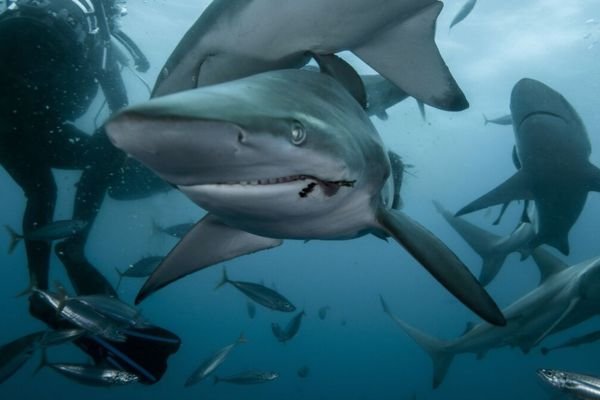
Understanding shark groups becomes more interesting when compared to groups in other animal species:
- Whales: Pods
- Lions: Pride
- Wolves: Pack
- Dolphins: School or Pod
Shark groups are unique because they are often fluid and dynamic, changing size and structure depending on circumstances. Unlike a pride of lions, which is stable, shark groups are temporary and often functional.
Conclusion
So, what is a group of sharks called? The answer depends on context, shiver for general movement, school for coordinated swimming, and frenzy during feeding. Observing sharks in groups shows a side of these predators that many people do not expect, social, strategic, and sometimes even cooperative.
Next time you see a shark or read about them, remember that these magnificent creatures are more than just solitary hunters. They are complex, fascinating animals that can teach us a lot about ocean life and animal behavior.
FAQs About Sharks in Groups
A shiver can include as few as 2 sharks or over 100, depending on the species and environmental conditions.
No. Social behavior varies by species. Reef sharks and hammerheads are more likely to form groups, while great white sharks are mostly solitary.
While a large group of sharks may seem intimidating, most shark species do not pose a threat to humans unless provoked or during feeding frenzies.