
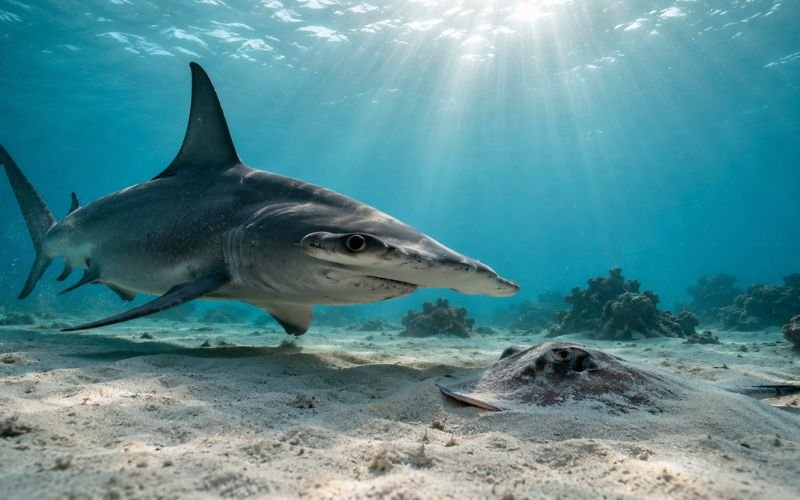
If you’ve ever seen a hammerhead shark’s strange, flattened head, you’ve probably wondered what exactly it uses that head for at dinnertime. The short answer to what do hammerhead sharks eat is that it depends heavily on which of the nine or ten known species you’re talking about. Their prey ranges from bony fish, squid, and stingrays to, in one unusual case, seagrass.
In this guide, we’ll break down exactly what different hammerhead species hunt, how their odd-shaped head helps them catch a meal, and how their eating habits compare to another famously opportunistic predator, the bull shark.
Hammerhead Shark Diet by Species
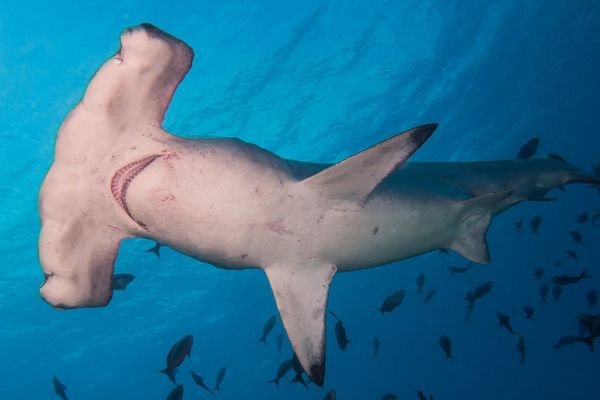
Hammerhead sharks belong to the family Sphyrnidae, which includes nine to ten recognized species. Sizes range enormously, from the three-foot bonnethead to the great hammerhead, which can grow past 18 feet. Not surprisingly, diet scales right along with body size.
Great Hammerhead Shark Diet
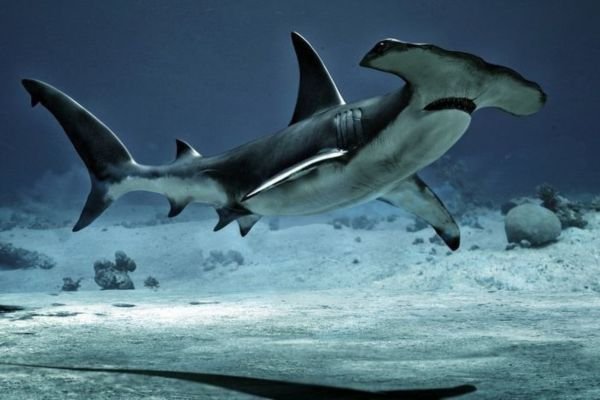
The great hammerhead is the largest species in the family, capable of reaching around 20 feet and over 1,000 pounds. Its signature meal is the stingray. It pins rays to the seafloor using its wide head, then bites off their wings to immobilize them. Great hammerheads seem to tolerate stingray venom reasonably well, and researchers have found individuals carrying dozens of stingray barbs embedded in their flesh, a testament to how often this hunting strategy gets a little messy.
Beyond stingrays, great hammerheads also eat:
• Other sharks, including smaller hammerheads (they’re known to be cannibalistic)
• Bony fish such as groupers and sea catfish
• Squid
• Bottom-dwelling crustaceans
A 2025 study published in the journal Oecologia by researchers at Florida International University found that great hammerheads may gain a significant energy advantage by targeting large, harder-to-catch prey like other sharks and rays, rather than settling for smaller, more abundant fish. The tradeoff between an easy meal and a bigger payoff appears to shape how this apex predator hunts. Great hammerheads are solitary hunters that typically feed at dusk, and the species is currently listed as Critically Endangered on the IUCN Red List.
Scalloped Hammerhead Shark Diet
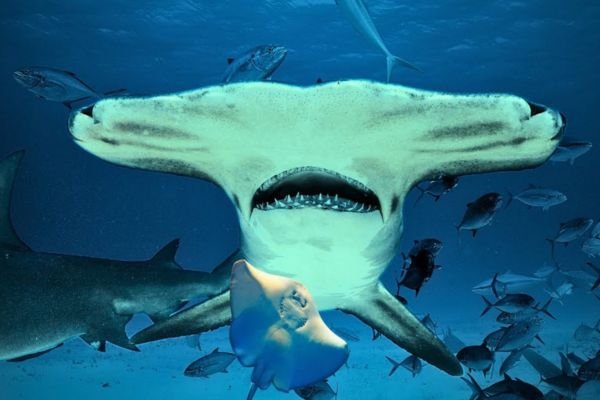
Scalloped hammerheads are known for forming large daytime schools near seamounts and reefs, even though they hunt alone at night. Their smaller, more slender teeth reflect a diet weighted toward fish, crustaceans, and cephalopods, with squid often making up a primary share of their meals.
Some scalloped hammerhead populations take feeding to extremes, diving more than 800 meters (roughly 2,600 feet) into cold, near-freezing water at night to hunt in the deep ocean. Like the great hammerhead, this species is now classified as Critically Endangered.
Bonnethead Shark: The Omnivore of the Shark World
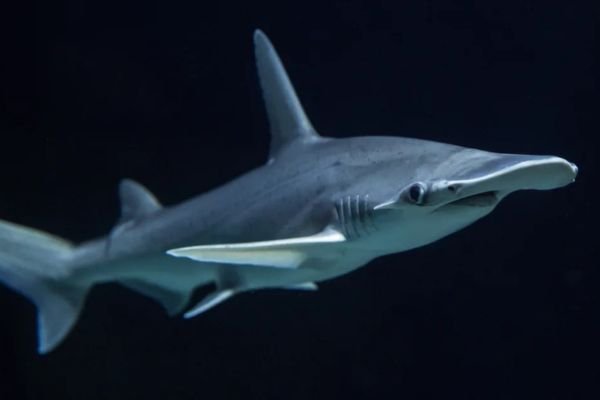
The bonnethead is the smallest hammerhead species, typically growing to only about three feet. It has thick, flattened teeth built for crushing rather than slicing, which suits its preferred prey of crabs, shrimp, and small fish buried in sandy seafloors.
What makes the bonnethead genuinely remarkable is that it’s the only species, out of more than 500 known sharks, confirmed to be omnivorous. Studies have shown it doesn’t just accidentally swallow seagrass while hunting for crabs; it actually digests the plant material and absorbs real nutrients from it.
Smooth Hammerhead and Other Species
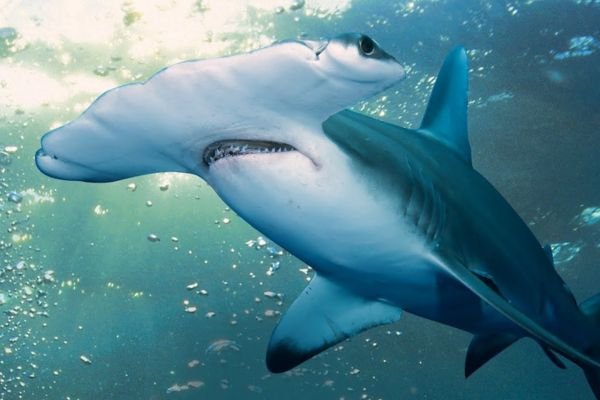
The smooth hammerhead shares a broadly similar diet with the scalloped hammerhead: fish, squid, and crustaceans. Lesser-known members of the family, such as the winghead shark, scoophead shark, and Carolina hammerhead, follow the same general pattern. The Carolina hammerhead is worth a mention on its own; it looks nearly identical to the scalloped hammerhead and wasn’t formally recognized as a separate species until 2013.
How Hammerhead Sharks Hunt Their Prey
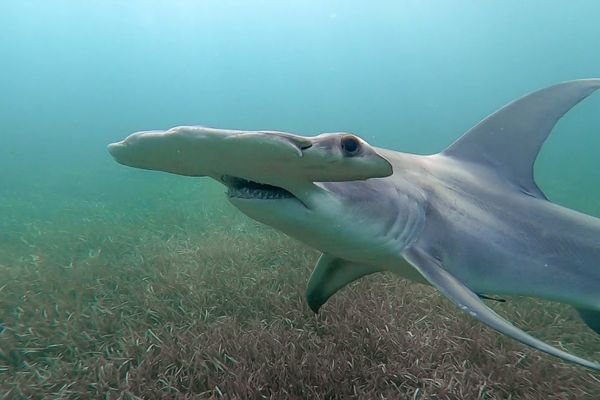
The hammerhead’s unusual head, technically called a cephalofoil, isn’t just for show. It’s a multipurpose hunting tool.
• Wraparound vision: With eyes set on either end of the head, hammerheads get close to 360-degree vision, letting them scan far more of their surroundings than most sharks.
• Electroreception: The underside of the head is packed with sensory pores called ampullae of Lorenzini, which detect the faint electrical signals given off by living animals. This lets hammerheads locate stingrays and other prey hidden under sand, even when they can’t see them.
• Pinning power: The flattened head works like a tool for physically pinning stingrays and other bottom-dwelling prey to the seafloor.
• Sharp maneuverability: The wide head also improves turning ability, helping hammerheads make quick, tight turns when chasing fast-moving schools of fish.
What Do Bull Sharks Eat?
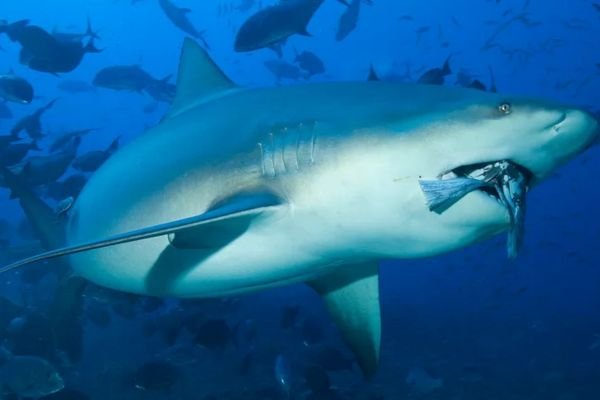
Shifting from hammerheads to a completely different family, bull sharks (Carcharhinus leucas) are best known for their unusual ability to survive in both saltwater and freshwater. Like hammerheads, bull sharks are opportunistic feeders, but their diet skews more heavily toward whatever is locally abundant.
Bull sharks primarily eat:
• Bony fish, which make up the dominant share of their diet in most regions
• Rays and other cartilaginous fish
• Smaller sharks, including other bull sharks
• Sea turtles
• Birds
• Crustaceans and mollusks, such as crabs, shrimp, and squid
• Occasionally dolphins, and rarely, terrestrial animals that wander too close to the water
When bull sharks migrate into rivers and estuaries, their menu shifts slightly to match the local freshwater ecosystem, favoring prey like tarpon, catfish, crabs, shrimp, squid, sea urchins, and even turtles and sawfish.
Bull sharks often head-butt prey before biting, likely to test or stun it, and their powerful jaws give them one of the strongest bite forces relative to body size among sharks. Their ability to move between habitats comes down to osmoregulation, a physiological adaptation involving specialized kidney function and glands that let them retain the right salt balance even in freshwater.
This adaptability has taken bull sharks remarkably far inland. They’ve been documented in the Mississippi River, the Amazon River (where some individuals migrate up to 2,300 miles round trip each year), the Zambezi River, the Ganges River, and even landlocked Lake Nicaragua. Unlike the great and scalloped hammerhead, bull sharks are currently listed as Vulnerable, with a declining but not yet critical population.
Hammerhead vs. Bull Shark Diet Comparison
| Feature | Hammerhead Sharks | Bull Sharks |
| Primary diet | Fish, squid, stingrays, small sharks (varies by species) | Fish (dominant), rays, other sharks, turtles, occasionally dolphins and birds |
| Feeding style | Solitary hunter; uses head to pin down prey | Opportunistic; often head-butts prey before biting |
| Habitat | Coastal and offshore waters; some dive to 800+ meters at night | Coastal waters, estuaries, and rivers; tolerates freshwater |
| Unique adaptation | Cephalofoil for wide-angle vision and electroreception | Osmoregulation, allowing survival in fresh and saltwater |
| Conservation status | Great and scalloped hammerhead: Critically Endangered | Vulnerable, with a declining population |
Interesting Facts and Statistics
• Great hammerheads have been found carrying dozens of stingray barbs embedded in their flesh, evidence of just how often their favorite prey fights back.
• Scalloped hammerheads have been tracked diving over 800 meters (about 2,600 feet) at night to hunt in cold, deep water, a strategy that requires special adaptations to conserve body heat.
• Bull sharks migrating up the Amazon River can travel roughly 2,300 miles (about 3,700 km) round trip in a single year.
• The bonnethead remains the only species among more than 500 known sharks proven to digest and gain nutrients from plant material.
• The great hammerhead can weigh over 1,000 pounds and stretch close to 20 feet, yet it has one of the proportionally smallest mouths among large sharks.
• Commercial fisheries kill more than 100 million sharks worldwide each year, according to the International Fund for Animal Welfare, and roughly half of all shark species are now considered threatened or near threatened.
• Global populations of great and scalloped hammerheads have dropped more than 80% over the past 70 years, driving both species to Critically Endangered status on the IUCN Red List.
Researchers studying great hammerhead feeding behavior have noted that predators constantly weigh the payoff of a hard-to-catch meal against the effort and risk involved. That tradeoff appears to explain why great hammerheads specialize in dangerous, energy-rich prey like stingrays and other sharks rather than settling for whatever is easiest to find.
Common Myths and Misconceptions About Shark Diets
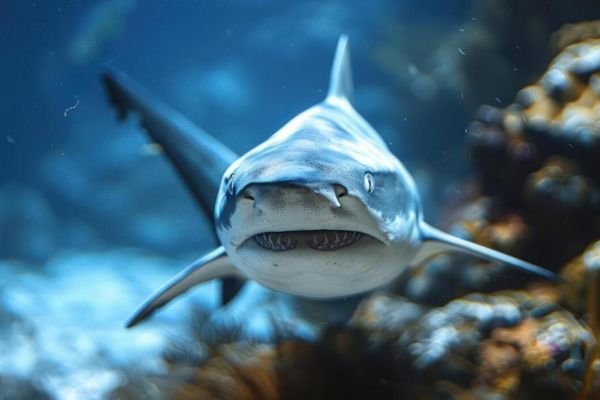
Myth: Sharks like hammerheads and bull sharks actively hunt humans for food.
Humans aren’t part of the natural diet of either species. Bites are typically cases of mistaken identity, curiosity, or a defensive reaction, not predatory hunting.
Myth: All hammerhead sharks eat the same thing.
Diet varies enormously across the family, from the great hammerhead’s near-exclusive focus on stingrays and other sharks to the bonnethead’s partly plant-based diet.
Myth: Bull sharks live strictly in freshwater or strictly in saltwater.
Bull sharks move fluidly between both environments thanks to osmoregulation, and their diet shifts slightly depending on which one they’re in at the time.
Myth: A hammerhead’s head shape makes it more dangerous to people.
The cephalofoil is a sensory and hunting tool built for finding fish, squid, and rays, not a weapon aimed at humans. Unprovoked hammerhead attacks on people are extremely rare.
Conclusion
So, what do hammerhead sharks eat? The answer depends on the species, but across the board it comes down to fish, squid, crustaceans, stingrays, and occasionally other sharks, with the bonnethead’s taste for seagrass standing out as the exception that proves the rule. Bull sharks take a similarly opportunistic approach, adjusting their menu based on whether they’re patrolling open coastline or working their way up a freshwater river. Both species are a reminder that shark diets are far more nuanced, and far less indiscriminate, than their reputation suggests.
Frequently Asked Questions
Yes. Great hammerheads in particular are known to eat smaller sharks, including other hammerheads, making them one of the few species with documented cannibalistic behavior.
Stingrays are considered the great hammerhead’s preferred prey. It pins rays to the seafloor with its head and bites off their wings before eating them.
No. Humans are not part of a hammerhead shark’s natural diet, and unprovoked attacks on people are extremely uncommon.
Juvenile hammerheads generally start out feeding on small, easy-to-catch prey like shrimp, crabs, and small fish, gradually shifting toward larger prey such as squid and rays as they grow.
Bull sharks are generally considered more dangerous due to their aggressive tendencies, powerful bite, and preference for shallow coastal waters where people swim, while hammerheads are typically shy around humans and rarely involved in attacks.