
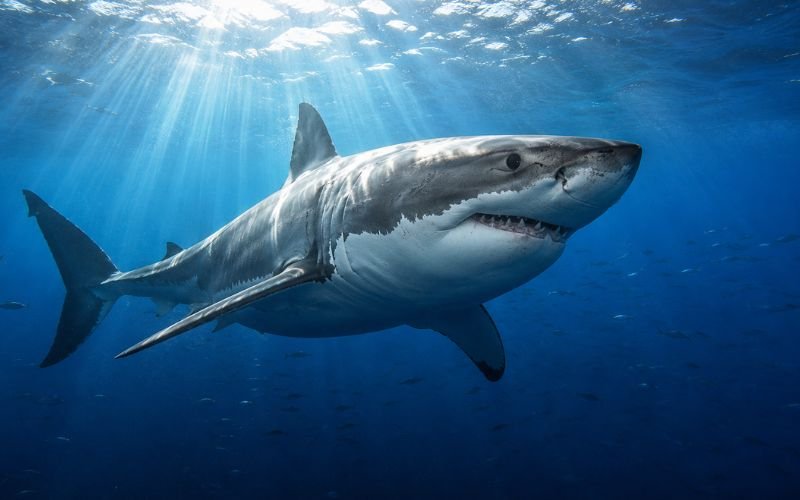
Picture this: sharks were already established ocean predators roughly 200 million years before the first dinosaur took a step. They’ve been around for about 450 million years, which puts their origin story well before trees, before land animals, before pretty much anything we think of as “ancient.”
That kind of timespan is hard to wrap your head around. It means sharks have quietly outlasted five separate mass extinction events, including the asteroid strike that ended the dinosaurs. This article walks through that long history, then answers two questions people search for almost as often: how sharks actually mate, and just how fast they can move through water.
How Long Have Sharks Been Around?
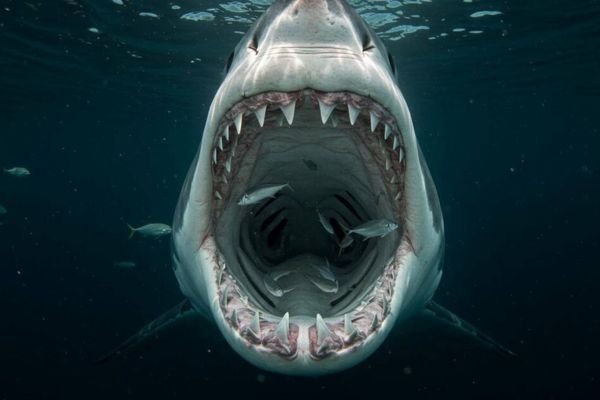
The earliest hints of sharks in the fossil record are scales, not teeth, dated to around 450 million years ago in the Ordovician period. Actual shark teeth don’t show up until about 420 million years later, in Silurian-era rock. Paleontologists lean on teeth and scales because a shark’s skeleton is cartilage, not bone, so it rarely survives intact.
Dinosaurs arrived on the scene about 230 million years ago. Do the math and sharks had a 200-million-year head start. Humans, meanwhile, have been around for a few hundred thousand years at most, which barely registers on a timeline this long.
A Rough Timeline of Shark Evolution
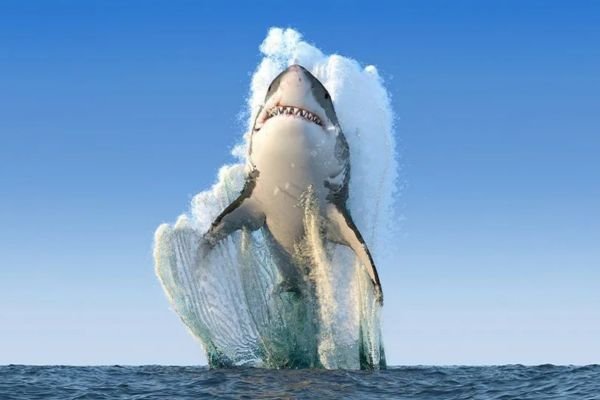
Shark evolution wasn’t a straight line from primitive to modern. It came in fits and starts, shaped by whatever the oceans were throwing at them at the time.
Around 450 million years back, those first scale fragments appear. By 420 million years ago, teeth enter the picture. Then things get interesting: between roughly 360 and 300 million years ago, during what paleontologists sometimes call the Carboniferous “golden age,” sharks diversified into some genuinely strange body plans, spiral-toothed jaws, saw-edged fins, shapes that look almost fictional next to today’s species.
Modern shark families started forming around 150 million years ago, in the Jurassic. Hammerheads are actually one of the newest branches on the tree, evolving as recently as 23 million years ago. Today there are over 500 recognized species, everything from the dwarf lantern shark (small enough to sit in your palm) to the whale shark, which can stretch longer than a city bus.
How They Kept Surviving Extinction Events
Because cartilage doesn’t fossilize the way bone does, most of what we know about ancient sharks comes from teeth and tiny tooth-like skin scales called dermal denticles. It’s a thin record, but it’s enough to confirm something remarkable: sharks made it through all five of Earth’s major extinction events.
That includes the Permian extinction, which is thought to have killed off around 90% of marine species, and later the extinction that took out the dinosaurs. Nobody knows the full reason sharks kept surviving, but a flexible diet and the ability to move into new habitats after each disaster probably had a lot to do with it.
How Do Sharks Mate?
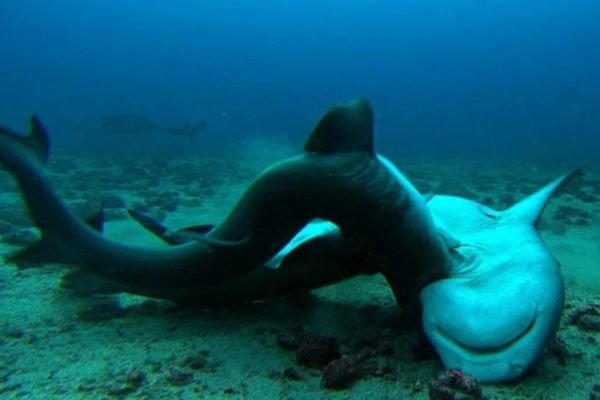
Shark mating doesn’t look much like reproduction in most other fish. Males have a pair of modified fins called claspers, which they use to deliver sperm directly into the female, so fertilization happens internally rather than out in open water.
It’s not a gentle process, either. Males frequently bite down on a female’s fins or flank to stay attached during mating, and in response, females of many species have developed noticeably thicker skin over time.
From there, reproduction splits into three general paths:
Some species, like the horn shark, lay tough, leathery egg cases (people sometimes call them “mermaid’s purses”) that finish developing outside the mother entirely. Others, including hammerheads and bull sharks, give birth to live young that developed inside the mother and were nourished through a placenta-like link. A third group, which includes great whites, keeps fertilized eggs inside the body until they hatch there, then gives birth to live pups without any placental connection.
Gestation length is all over the map depending on species; some sharks carry young for only a few months, while the frilled shark may carry its young for close to two years, among the longest pregnancies of any vertebrate on record.
How Fast Can Sharks Swim?
Not all sharks move at the same pace, not even close. Speed comes down to body shape, muscle type, and how the species hunts. The shortfin mako is the clear speed champion, capable of short bursts near 45 miles per hour, which makes it one of the fastest fish in the entire ocean, not just among sharks.
Great whites are slower at their peak but still plenty fast when it counts, hitting bursts around 25 miles per hour during an ambush strike from below. Compare that to a nurse shark or a Greenland shark, both of which cruise under 2 miles per hour most of the time, relying on patience and stealth rather than speed.
Speed Comparison by Species
| Shark Species | Approximate Top Speed | Hunting Style |
| Shortfin Mako | 45 mph | Fast open-water bursts |
| Great White | 25 mph | Ambush from below |
| Blue Shark | 25 mph | Long-distance cruising |
| Blacktip Shark | 15 mph | Active reef hunting |
| Nurse Shark | 1–2 mph | Slow bottom feeding |
| Greenland Shark | 0.7 mph | Deep-water scavenging |
Myths Worth Correcting
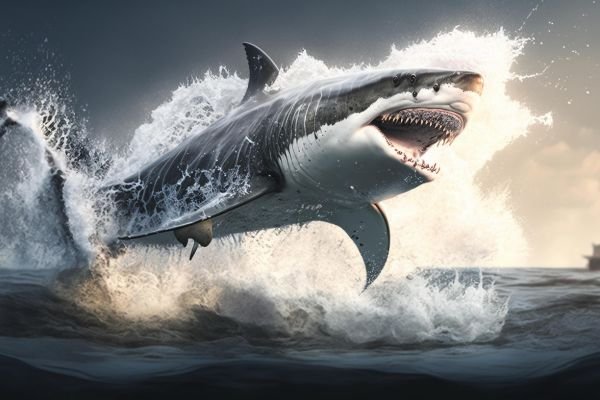
A lot of what people “know” about sharks doesn’t hold up. A few of the more persistent ones:
The idea that sharks are unchanged, living fossils frozen in time is off base; the fossil record shows continuous change, and several major shark families are only tens of millions of years old, which is relatively young in evolutionary terms. Another common assumption is that every shark is dangerous, but the overwhelming majority of the 500-plus known species feed on small fish, plankton, or invertebrates and pose essentially no threat to people. There’s also a widespread belief that all sharks must swim constantly or suffocate; that’s true for a handful of species that rely on forward motion to push water over their gills, but plenty of others can sit still and pump water through their gills on their own. And while great whites get the reputation, they’re not actually the fastest, that title belongs to the mako.
A Few More Facts Worth Knowing
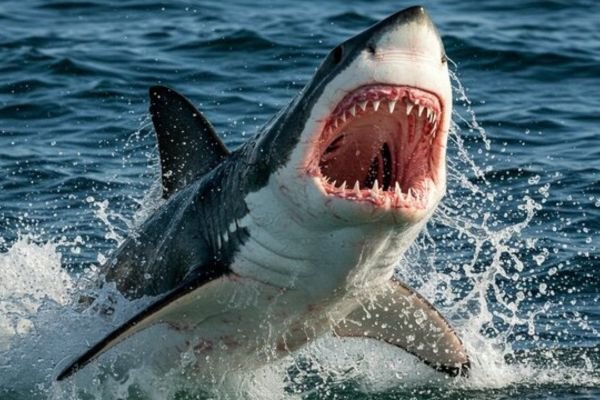
Sharks predate trees by somewhere around 90 million years. Greenland sharks may live for centuries, with some estimates putting individual animals at 300 to 500 years old, possibly the longest-lived vertebrates known. Sharks also go through teeth constantly throughout their lives, some species shedding tens of thousands over a lifetime. And hammerheads, despite feeling like a classic, ancient-looking shark shape, are actually among the youngest shark lineages around.
Conclusion
Answering how long sharks have been around isn’t really about one number, though 450 million years is the figure worth remembering. It’s about what that number represents: five mass extinctions survived, hundreds of species evolved and lost, and a lineage that’s been quietly reinventing itself since long before anything walked on land. Add in how they reproduce and how fast the quickest species can move, and it’s clear sharks aren’t just old, they’re built for staying power in a way few other animals on Earth can claim.
FAQs
Around 450 million years, versus roughly 230 million years for dinosaurs, so sharks predate them by about 200 million years.
The frilled shark and goblin shark are often pointed to as close relatives of ancient lineages, though no living species today is truly identical to its prehistoric ancestors.
Internally. Males use claspers to transfer sperm directly into the female, unlike many fish that fertilize eggs externally.
The fastest sharks, like the mako, come close to dolphin speeds in short bursts, though dolphins generally hold the edge over longer distances.
No. Some lay eggs, some give live birth, and some hatch eggs internally before giving birth to live young.
Cartilage is lighter and more flexible, which helps with swimming efficiency and gives sharks a slight buoyancy edge.
More than 500, spanning a huge range of sizes, habitats, and behaviors.
The Greenland shark, typically moving under 1 mile per hour.